
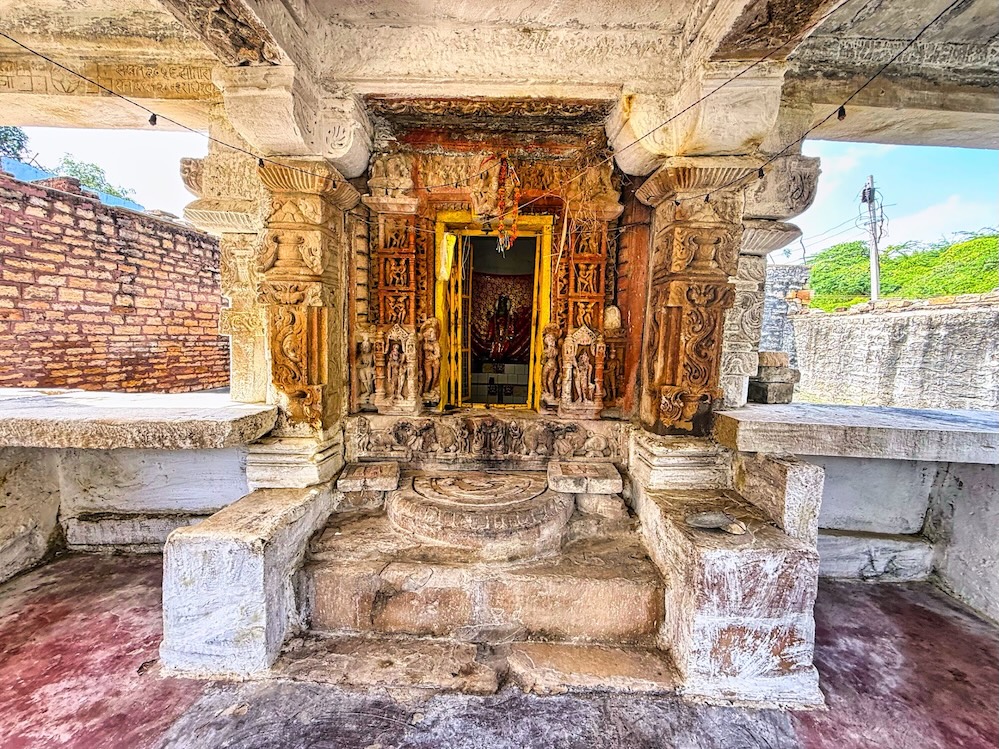
Barahwali (also spelled Varahvali) is a historically significant yet lesser-known archaeological site located in the Morena district of Madhya Pradesh. Situated in the Chambal River valley—close to the more prominent Bateshwar temple complex and Padhawali—the village houses an exquisite 11th-century medieval temple dedicated to Lord Vishnu. Not much is known about the village and its foundations; however, politically, the area flourished under the Kachchhapaghata dynasty during the 10th and 11th centuries CE. The Kachchhapaghatas were formidable rulers of the Gopādri (Gwalior) and Sihoniya regions, known for their distinct architectural patronage that bridged the earlier Gurjara-Pratihara traditions with the mature Central Indian temple styles. The temple at Barahawali was commissioned during this period when the Pratiharas’ power was shifting to the Kachchhapaghata regional power, serving both as a spiritual center and as a statement of political stability.


Vishnu Temple: The temple faces east and is situated in the middle of the village. The original temple is composed of a garbhagrha fronted by a mukha-mandapa. At a later time, probably during the Kachchhapaghata rule, an open maha-mandapa was added to the temple.1 The maha-mandapa has an entrance in the east, and the side walls were raised only to half height, allowing air and light to circulate through the structure. The low-height side walls allow for the benches, and the pillars were raised over them to support the ceiling. The garbhagrha doorway is composed of three shakhas (jambs). The middle shakha, rupa-shakha, has niches occupied by amorous couples. Ganga and Yamuna are present over the jamb bases. The lalata-bimba over the lintel has Vishnu riding over Garuda. The lintel terminals have Brahma and Shiva. The nava-grha group occupies the recessed space. Inside the garbhagrha is a modern statue of Vishnu.
1 Ali, Rahman (1987). Pratihara Art in India. Agam Kala Prakashan. New Delhi. p. 38
Acknowledgment: Some of the photos above are in CC0 1.0 Universal Public Domain from the collection released by the Tapesh Yadav Foundation for Indian Heritage.